Search
155 items
-
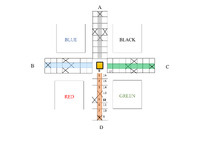
Pachisi: Downloadable Game
This is a downloadable resource of a Pachisi Game one can download and play referring to the rules and using the given pieces. -
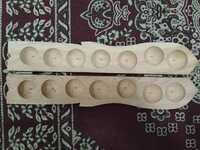
Pallanguzhi
Pallanguzhi, also called Pallankuzhi is typically known as the game of many pits (pal meaning many and kuzhi meaning pit). The game requires a wooden board with holes on both sides of equal number. There are many kinds of pallankuzhi boards. While the most common one is rectangular with seven pits on each side and at times two extra longer pits. It is a two-player game played by played facing opposite each other. It is played with cowrie shells, precious stones, tamarind seeds or materials locally available to the region. The material used also depended on the socio-economic status of the players along with availability in local regions. The number of stones or cowries used per pit also determined the strategy and the rules of the game. The number of pieces could range from four to twelve or even more. There are other kinds of boards for example, according to V. Balambal, the Pallanguzhi board of Kanyakumari region is in a triangular shape instead of a rectangle and it is played as a three-player game with five pits belonging to each player. With the number of pits varying the play traditions and the game rules also vary. Usually in Tamil Nadu, there are four kinds of boards. The rectangular with seven pits, a board with six pits with two larger pits to store the cowries or the seeds (closer resemblance to Mancala), the triangular board and another type of board with ten pits on each side and two larger pits at the centre allowing even four players to play with five pits each. As stated from sources, there are examples of the game being played without a board being present. According to Balambal, this game is more popular among women than men. The board at times are pits dug on the ground in order to play or even drawn circles on the ground to serve as a pit. Boards although popularly made of wood, also have other variants of material like metal, ivory or commonly even plastic. This game is also popular amongst the Muslim community in Southern Tamil Nadu who play this game as a ritual during the fifth day after a marriage ritual with coins. These coins are usually paid by the family of the bride. -
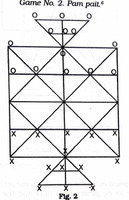
Pam Pait
This game has been documented by Charu Chandra Das Gupta at Jowai in Meghalaya. He draws similarities of this two player game with another game called Ahtarah gutti and with other variants such as Lum Pusri or Sipahi Kat in the Teesta Valley below Darjeeling in Ben- gal, Mughal-Pathan in the Twenty-four Parganas, Howrah and Hooghly districts in Bengal, and as Sholaguti Mangalapata in Vikrampur in East Bengal as far as the rules are seen. -
Panchi, Handmade
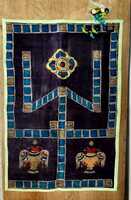
Panchi is a two player race game with five pieces per player. One of the earliest mention of the game came from Maharaja Mummadi Krishnaraja Wadiyar III who was the king of Mysore between 1799 and 1868 C.E. His contribution of six encyclopedic compilation of manuscripts included the first mention and the rules of this game. A brass plate of a carved Panchi board is currently a part of the collection of board games at the British Museum. The rules of the game were later recorded and written by R. Vasantha in 'Maharaja’s Games and Puzzles'. This board is made by Ramsons Kreera Pratisthan on Kalamkari. They are working towards the revival of traditional Indian Boardgames through manufacture of handmade boards, casting pieces and counters. They collaborate with artists and artisans all across India to make such boardgames and their material have a number of varieties such as, Navalgund Jamkhana, Silk embroidery, Batik print, Mysore silk zari weaving etc. Other than variants in types of cloth and handloom they also manufacture boardgames on Marble, Mysore wood, Brass Casting, Wood Polychrome and many as such. -
Panchi: Downloadable Game
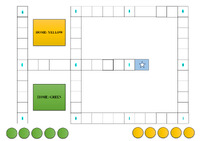
This is a downloadable resource of a Panchi Boardgame one can download and play referring to the rules and using the given pieces. -
Para Sho (Tibetan Board Game)
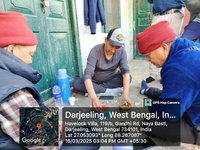
Para Sho is a cherished traditional game in Tibetan culture, where players toss wooden dice into a bowl, blending the elements of luck and strategy. Often played during festivals and social gatherings, this game has been a source of joy and connection among Tibetan communities for generations. The game is almost forgotten even in the Tibetan communities in India but a few players remain in Darjeeling and nearby regions. Three players were observed and the play experience documented at the Tibetan Refugee Centre in Darjeeling. The players play this game from 10 am to 5 pm every Sunday. The game is still played during Losar, the Tibetan new year. The players often use Tibetan words that are specific to this game. -
Playing Sawantwadi Ganjifa
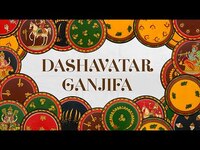
A detailed video on the rules of playing Dashavatar ganjifa cards. Sawantwadi, a town on the Konkan coast of Maharashtra, is famous for its ganjifa cards, a tradition maintained by the Sawantwadi Royal Family. This video shows a simple step-by-step guide to playing what is otherwise considered a complicated game with ten suits (after the ten avatars of Vishnu) and 120 cards. Currently, the royal family supports workshops on playing ganjifa cards and also has a number of craftsmen who make the elaborate sets of ganjifa cards of a range of designs. Rani Satvashiladevi Bhonsle has been one of the prime movers in restoring the tradition, which is now being carried forward by Shraddha Lakham Sawant Bhonsle and others in the royal family. -
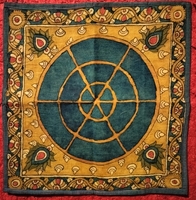
Pretwa
This attractive variant of alquerque, a forerunner of draughts, was played in Bihar in India. Its board is of three concentric circles joined by six spokes, the spokes not meeting in the middle. A variant with 7 concentric circles was also played. Though nowhere stated in Western accounts of the game, it is assumed that one piece may jump over another along a curved line. Two commentators write about this game in the early 20th century. Hem Chandra Dasgupta first observed this game being played by railway porters in Sealdah Station in Calcutta (now Kolkata). The porters belonged to Chhapra, Bihar. Eminent geologist, Sunder Lal Hora states that the game is also known in Ballia in Bihar where it is called Supaebeni. He notes that 'Prof. Das-Gupta has already explained the etimology of Pretoa (from Pretas or ghosts); while Supa-beni is the vernacular name of swallow, a bird which in its flights circles round and round as well as darts straight forwards. In the district of Arrah the game is known as Chakwa-boh and Nao-gutiya Chakwa-boh is the vernacular name used for a kind of diving bird, probably the Indian little Grebe —Podiceps ruficollis capensis (Salvaclori), which, when alarmed, dives under water and re-appears at unexpected points, so that there is no limit to the direction of its movements'. They also compare the game with Gol Ekuish from the erstwhile Central Provinces in India. Hora also notes some superstitions prevalent around the playing of Pretwa.