Search
155 items
-
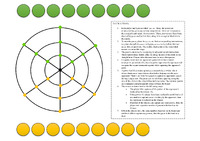
Pretwa: Downloadable Boardgame
This is a downloadable resource to help you learn Pretwa -
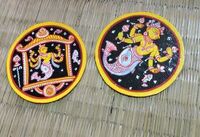
Raja (King) and Mantri (Vizier) card
Ganjifa cards of Raghurajpur: The raja card is usually depicted with a chariot and is the card with the highest points. The mantri card is without the chariot. -
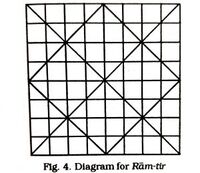
Ram- Tir from Bihar
This game has been documented by Charu Chandra Das Gupta. The information has been provided by an individual who was a staff of the Nalanda Museum at Bihar at the time. According to Charu Chandra Das Gupta, there are eighty one cross points out of which the central point remains vacant. This game has similarities according to Charu Chandra Das Gupta, with a game called Ratti- Chitti- Bakri or (red white goats). The only point of difference is that the boards used for the two are not similar to one another. The meaning of the word Ram-Tir could not be explained by the informant. -

Ramayana Ganjapa from Sonepur
The images here showcase Ramayana Ganjifa or Ganjapa by Satyanarayan Maharana of Ghoraghatpura, one of the last remaining artists of Sonepur Ganjifa cards at Odisha. His family has been involved in making Ganjifa cards for generations and he has learnt the art from his father. His wife, Umavati Maharana is also an artist who makes Ganjifa cards. They are additionally artists who make patachitra paintings as well. Ganjifa cards are hand painted cards made out of cotton cloth, tamarind seed powder and khari mati (chalky soil). After the base of the cards are prepared, they are painted. While there are variants like Navagunjara, Ashtamala, Satyanarayan Maharana mainly makes Ramayana painted Ganjapa cards. Satyanarayan Maharana mainly makes Ramayana painted Ganjapa cards. Ramayana painted Ganjapa cards consists of a set of 144 cards, comprising of 12 suits, with 12 cards in each suit and requires 4 players. Ram has 6 suits namely, Ram, Lakshman, Makar (team of monkey), Bhalu (jambuban), Parvat and Bibhishan. Ravana’s team also comprises of 6 suits namely, Ravana, Kunt, Katari,Sul, Pasho and Khanda. Every suit has a king card, a vizier card, an Ace and numbered cards from 2 to 10, 2 being highest and 10 being lowest. The numbered cards have unique symbols drawn on them and the number of symbols drawn signifies the number of the card. While playing, once the cards are randomly distributed, the player who receives the Ram card and the player sitting opposite to him belongs to the Ram lobby, making the other two players part of Ravana’s lobby. -
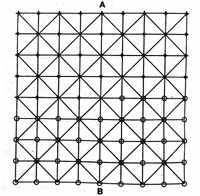
Ratti Chitti Bakri (Red White Goats)
This game was documented by Hem Chandra Das Gupta while he was working on some of his own geological field work. The informants as he stated were Pathan or Pashtun who lived in Mianwali district of Punjab. He explained in his essay that the games he documented from the region were played by everyone in the area including both children and elders, and the games were found at times etched on stone slabs in common spaces. Similar looking boards have been commonly found both in incised patterns in various sites across India inside temples and also in other places. The board of this game has similarities with the games Bis Gutiya and Ram Tir from Bihar. It is a two-player game. According to Das Gupta, there are 81 cross-points and each of the two players is the possessor of 40 pieces, the central point being left vacant. The rules of this game are very similar to the game of Bara Guti. As explained by the informants, this game is played with red and white stones which also relates with the abundance of stones in the region of Mianwali, Punjab in Pakistan. There is a great deal of similarity between this game and the game known as Satul prevalent in Sumatra, the only distinction being that in the Sumatra game, two additional triangles with their apices at A and B are required. Each of these two triangles has six cross-points, so each player has to provide himself with 16 pieces instead of 40 as in case of the Punjab game. This game travelled to Cape Town in South Africa through East-Indian slave trade under Dutch rule, where it is called Dam Daman and currently Ratti-chitti-bakri is also connected with checkers, roundabouts and draughts, and Surakarta in France. In the Philippines it is known today as damath, as it is used as a teaching tool for maths. The real name of the game is believed to be permainan, which is the Malay word for 'game'. -
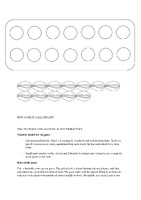
Rules of Pallankuzhi
The Rules of Pallankuzhi played in Palakkad, Kerala -
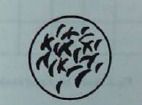
Sankha Khela
This game was documented by Chhanda Mukhopadhyay and Krishna Basu from Kantabania in Baleshwar district of Orissa from informants aged six to ten years. They are members of the Bauri community and this game was popular amongst them. This is a two player game. A circle is drawn of about eight to twelve inches radius on the ground with brick pieces or chalk. At the centre of the circle the players assemble broken pieces of glass bangles of different colours to play this game. -
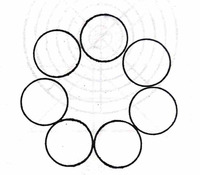
Sat Gol Game
This game was recorded by Hem Chandra Das Gupta and the information was collected during one of his field visits to Gosalpur in the district of Jubulpur, in present Madhya Pradesh. According to Das Gupta concentric circles with three diameters are required for playing the game. It is a two player game played with four stones each kept in one circle. This game according to other sources, is similar to other variants of Mancala but the unique factor that it carries is the structure of the board. Elsewhere the board consists of a rectangular format with circles drawn on each side or played on a wooden board with holes made onto them, making it a two player game but here it is conformed into a circle hence giving it the name, Sat-Gol. Das Gupta further states in his essay that a careful study of this game shows the similarities with the Khasi game of Mawkarkatya, and a few other games allied to it. This game however, appears to be an extremely primitive form of the game prevalent in the Assam hills, Orissa and other places. Murray misunderstood Das Gupta's description, writing that "the player captures the contents of the hole beyond, or if there is a sequence of empty holes, the contents of the first loaded hole". Das Gupta, however, stated: "[The move] continues until the player drops his last piece within a circle next to which there is an empty one and then he will be in possession of the pieces lying within the circle immediately next to the latter".