Search
155 items
-
Bagha Chheli ( Odisha)
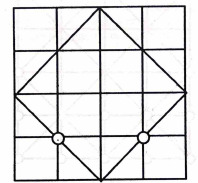
This game has been recorded by Hem Chandra Das Gupta and the informant was from Odisha; it is also called Bagha Bajari. This is explained as another variant of Bagh Chal which is played popularly all across India. There are variants in Bhutan and this hunt game is popular in Nepal too. The variants of the structure of the boards vary, along with the number of pieces representing the goats and tigers but the intention of winning the game, remains the same in most cases. Two players are necessary for playing this game, one in charge of the tigers and the other in charge of the goats. The tigers are 4 in number while the number of the goats is 20. Before the commencement of the game, the tigers are arranged at the places indicated in the figure by the circles and 4 goats are kept on any 4 cross-points according to the discretion of the player. The move begins with the man who has got the tigers, and the player who has the remaining 16 goats in his hand must place all of them on the cross-points one after another before he may move any goat on the diagram from one cross-point to another. The player with the tiger tries to capture as many goats as he can while the other player aims at checkmating his opponent. -
Bagha Guti
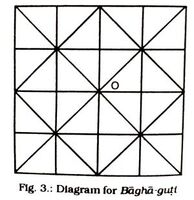
This boardgame has been recorded by Charu Chandra Das Gupta and the information has been given by a staff of the Nalanda Museum in Bihar. This game as described by Das Gupta, is a two player game with twenty one pieces placed together in the central point marked as O and another piece placed as the 'tiger' which can be placed at any cross point at the starting of this game. He also states in his essay that this game is played differently than the games whose board look similar to this one. -
Baghchakkar or Chakrachal
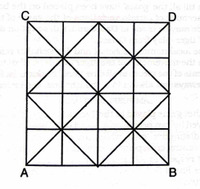
This game was documented by Sunder Lal Hora at Kalijhora at present Kalimpong district. The informant of these games was a local man of the area who was of Nepali origin. Credit also has been given to Mr. F.D Raj of Kalimpong who helped confirm the rules and the descriptions of the documented games. This is a variant of Tiger and Goats or Bagh Chal. It is a two player game in an alquerque board. the tiger is represented by four pieces and the goats are represented by twenty. The intention of winning remains similar to other forms of Bagh Chal. For the Tiger, it would be to capture at least five goats and for the goats it would be to encircle the tiger so that it does not have any further moves. The unique features of this variant is that, the four tigers are placed at the commencement of the game at the extreme four corners and the goats are brought on the board one by one. Secondly once placed, no goat is to be moved from its position till all the goats have been placed on the board. -
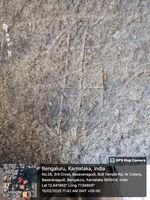
Baghchal, Bull Temple (3)
This etched or incised Bagh Chal game board has been documented from the Bull Temple in Karnataka. It lies on the left side of the porch, second pillar from the entrance of the temple. Bagh Chal or Tigers and Goats is an ancient hunt game that has been popular in many regions of the world. The board of Bagh Chal is part of the alquerque family which traces its history to the Moors of Spain in their Libro de Los juegos (book of games) commissioned by Alfonso X in the 13th century. Although the rules were first found there, the history of alquerque goes further back to Egypt and to a name mentioned in the Kitab-al-Aghani (book of songs) as Kirkat or Al-Kirkat. Besides reference in literature similar game boards have been found both in practice amongst players in various communities as well as in archaeological sites. Bagh Chal has many variants, and is known by different names all over India, Nepal, Bhutan and other countries of South Asia. The structure of the board, the number of pieces and the variants in the rules may vary from place to place but the intention of winning remains the same. It is a two-player game where one individual represents the tiger and the other represents the goats. The number of tigers vary from one to even five in some games while the number of goats can be twenty or less or more depending on the structure of the board and the rules popular to the region. The Basavanagudi Bull temple is a popular pilgrim location and is famous for largest stone carving of Nandi, the vahana (vehicle) of Lord Shiva. This temple was built by Kempe Gowda who was also known as the founder of Bangalore. The temple also has a lot of local folklore about villagers worshipping the bull. Hence from the time of its origin to present day, it is frequented by tourists, pilgrims and local people of the region. This graffiti board lies on the left side of the porch. The temple is built in Vijaynagara style with the Nandi idol in the centre and porches on both sides. -
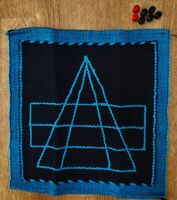
Baghchal, Handmade
Bagh Chal or Tigers and Goats is an ancient hunt game that has been popular in many regions of the world. The board of Bagh Chal is part of the alquerque family which traces its history to the Moors of Spain in their Libro de Los juegos (book of games) commissioned by Alfonso X in the 13th century. Although the rules were first found there, the history of alquerque goes further back to Egypt and to a name mentioned in the Kitab-al-Aghani (book of songs) as Kirkat or Al-Kirkat. Besides reference in literature similar game boards have been found both in practice amongst players in various communities as well as in archaeological sites. Bagh Chal has many variants, and is known by different names all over India, Nepal, Bhutan and other countries of South Asia. The structure of the board, the number of pieces and the variants in the rules may vary from place to place but the intention of winning remains the same. It is a two-player game where one individual represents the tiger and the other represents the goats. The number of tigers vary from one to even five in some games while the number of goats can be twenty or less or more depending on the structure of the board and the rules popular to the region. While etched boards or boards scribbled on the ground is a tradition in many regions in South Asia, popular bagh chal boards are now being manufactured on paper and cloth and different variants are being made by the handmade industry. This particular board is made of Solapur Dhurry [handwoven rugs] by Ramsons Kreeda Pratisthana, from Mysore. -
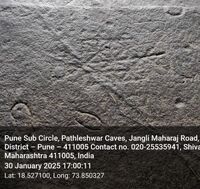
Baghchal, Pataleshwar (2)
This etched or incised Bagh Chal board was recorded from the main cave complex on the second row of the pillared halls on the left side from the entrance facing the cave. Bagh Chal or Tigers and Goats is an ancient hunt game that has been popular in many regions of the world. The board of Bagh Chal is part of the alquerque family which traces its history to the Moors of Spain in their Libro de Los juegos (book of games) commissioned by Alfonso X in the 13th century. Although the rules were first found there, the history of alquerque goes further back to Egypt and to a name mentioned in the Kitab-al-Aghani (book of songs) as Kirkat or Al-Kirkat. Besides reference in literature similar game boards have been found both in practice amongst players in various communities as well as in archaeological sites. Bagh Chal has many variants, and is known by different names all over India, Nepal, Bhutan and other countries of South Asia. The structure of the board, the number of pieces and the variants in the rules may vary from place to place but the intention of winning remains the same. It is a two-player game where one individual represents the tiger and the other represents the goats. The number of tigers vary from one to even five in some games while the number of goats can be twenty or less or more depending on the structure of the board and the rules popular to the region. Pataleshwar cave complex are a small group of five excavations, developed into a cave temple dedicated to Pataleshwar, God of the underworld or Shiva. This cave complex is ruggedly excavated and also bears resemblance with the Elephanta caves of Mumbai. The cave has unfinished murals on the sides and on the backside. There is a Nandi pavilion at the entrance of the cave which is circular. The inside of the main cave contains a pillared hall with a pradakshinapatha the way to go around the shrine. One side of the cave remains unfinished. This and other boardgames were documented on the floor of the cave. -
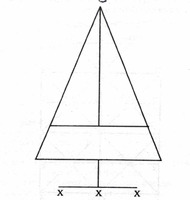
Bam Blang Beh Khla
This game has been documented by Charu Chandra Das Gupta from Jowai, Meghalaya. This game is played by two men, one having the a piece marked O as mentioned in the text and the diagram and called khla (tiger) and the other having three pieces marked X and called blang ( goat). Thus altogether four ballets are required in this game. By the name it is another form of a popular gam,e called Tigers and Goats or Bagh Chal which has many variants in South Asia with differences in the number of pieces used to play and also the designs of the boards changing the complete strategy of the game. According to Das Gupta this variant is unique as the structure of the board is different from what other alquerque boards look like. -
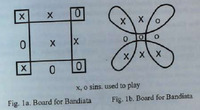
Bandiata
This is a two player game. According to Kulirani and Vijayendra this game is known as bandiata in the districts of nothern Karnataka. Bandi means cart which adds to the meaning of a bullock cart or vehicle while ata means play in Kannada. The board is usually drawn or sketched on the ground with a piece of chalk or is even drawn on paper with a pen.