Sat- Gharoa
Item
- Title (dcterms:title)
- Sat- Gharoa
- Description (dcterms:description)
-
This game has been documented by Charu Chandra Das Gupta and the information initially was given by a staff of the Nalanda Museum in Bihar. Although Das Gupta could not understand the rules of this particular game himself, he still describes it as a two player game. He further draws similarities of Sat-Gharoa with another game played by the Khasis (Meghalaya) and also in Orissa and Madras.
Although he does not mention the names of the similar game played in the other regions, there is a further note from the referenced text on this game by S.L Hora. He further mentions the rules of the game as described below.
He also mentions that the duration of this game is long and it does not require a lot of skill to play. But, during the end of the game when the pieces are comparatively lesser, the skills are required to empty the holes or the depressions to win the game.
- Alternative Title (dcterms:alternative)
- Mow korkatia / Longbeuacha (Assamese ), Sat-gol (Hindi), Ali Guli Mane (Kannada), Vai Lung Thlan (Mizo), Kanji guti (Odia), Khutka boia (Punjabi ), Pallanguzhi/ Pallankuli (Tamil), Vamana Guntalu (Telugu), Chenna Maaney (Tulu), Pachgarhwa (Urdu), Til-goti, Chal goti (Mundari), Sat Gharoa (Bihar), Bakri (Chattisgarh)
- Rules (dcterms:instructionalMethod)
-
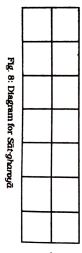
For playing Sat-Gharwa two parallel rows of seven depressions each are made in the ground. In each depression there are seven pieces of some hard substance. The game is played by two people sitting opposite each other. The row of depressions in front of each person is theirs.
To begin, one of he players picks up the pieces from one of his depressions and goes on putting one piece into each depression moving clockwise. As soon as he has dropped the seven pieces he started with, he picks up all the pieces lying in the depression immediately next to the depression where the last piece was deposited and then the previous action is repeated. He must go on repeating this till, after having deposited all the pieces that he may carry in his hand, he comes to an empty depression lying immediately next to the one where the last piece was dropped. In this case all pieces of stones lying within the depression immediately next to the vacant one will be taken out of the depression and kept aside by him. Now the other player takes his turn. It is optional for him to pick up the pieces from whichever depression of his side he chooses. Usually the pieces are counted and those likely to win are first moved. Once the choice is made, it has to be carried into effect. If the last piece happens to be deposited in a depression which is followed by two or more empty depressions, then the person loses his turn.
When few pieces are left in a few depressions on each side then real skill in moving the pieces comes in, for to win the game it is necessary that one should capture or have all the pieces removed from the depressions of his adversary. Till ultimately one person has pieces to move while the other is without any piece, the latter loses the game. Sometimes, as it happened with me, there is a draw, if both sides have played equal number of times and there is one piece with each in the extreme left-hand depression. - Creator (dcterms:creator)
- Charu Chandra Das Gupta and S. L Hora
- Source (dcterms:source)
- 'A Few Types of Sedentary Games From Bihar' by Charu Chandra Das Gupta in Sedentary Games of India eds. Nirbed Ray and Amitabha Ghosh
- Contributor (dcterms:contributor)
- Charu Chandra Das Gupta and S. L Hora
- Rights (dcterms:rights)
- Creative Commons
- Format (dcterms:format)
- Boardgames
- Medium (dcterms:medium)
- Boardgames on Text
- References (dcterms:references)
- A Few Types of Sedentary Games From Bihar' by Charu Chandra Das Gupta in Sedentary Games of India.
- Spatial Coverage (dcterms:spatial)
- Bihar
- Variants (dcterms:isVersionOf)
-
 Cenne Mane
-
 Khutki Boia
-
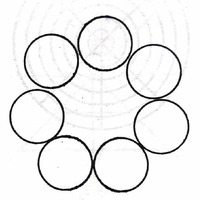 Sat Gol Game
-
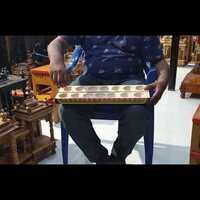 Gud Phale
-
 Pachgharwa (five spaces/homes)
-
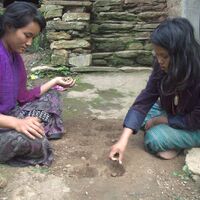 Düzalé
-
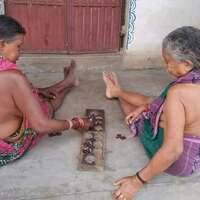 Kasadi
-
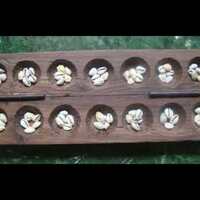 Interview with Professor Priya Sangameswaran (CSSSC): On Playing Pallanguzhi/Pallangudi in Palakkad
-
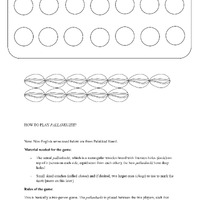 Rules of Pallankuzhi
-
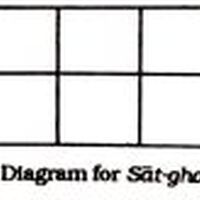 Sat- Gharoa
-
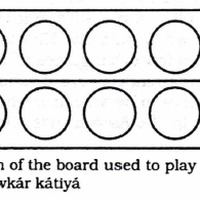 Mawkar Katiya
-
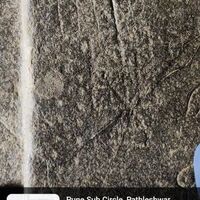 Mancala, Pataleshwar (7)
-
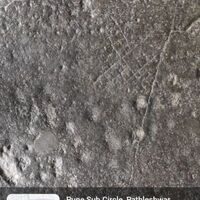 Mancala, Pataleshawar (8)
-
 Chaupar, Pataleshwar (3)
-
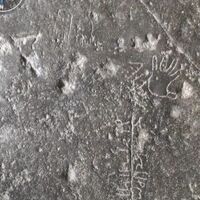 Incomplete Mancala, Pataleshwar (6)
-
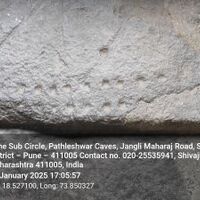 Mancala, Pataleshwar (4)
-
 Mancala, Pataleshwar (5)
- Entered by (dcterms:accrualMethod)
- Adrija Mukherjee
- Tags (dcterms:conformsTo)
- Mancala
- pallanguzhi
- Ali Guli Mane
- Sedentary Games
- Games from Bihar
- Sat Gol
- Vamana Guntalu
- Sat-Gharoa
- Two-player
- Cowrie
Linked resources
| Title | Class |
|---|---|
| Rules of Pallankuzhi |
Document |
| Title | Class |
|---|---|
| Cenne Mane |
Text |
| Düzalé |
Text |
| Gud Phale |
Text |
| Incomplete Mancala, Pataleshwar (6) |
Physical Object |
| Kasadi |
Document |
| Khutki Boia |
Text |
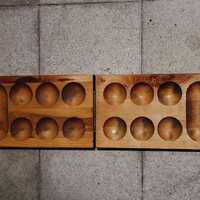 Mancala Mancala |
Physical Object |
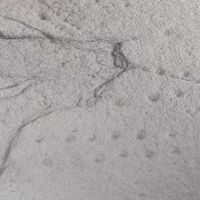 Mancala Finished and Unfinished, Pataleshwar (1,2) Mancala Finished and Unfinished, Pataleshwar (1,2) |
Physical Object |
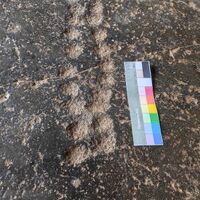 Mancala, Bhaja Cave Complex Mancala, Bhaja Cave Complex |
Physical Object |
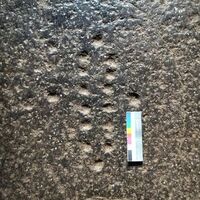 Mancala, Karla (1) Mancala, Karla (1) |
Physical Object |
| Mancala, Pataleshawar (8) |
Physical Object |
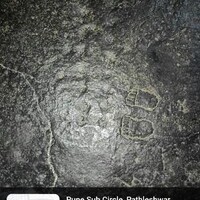 Mancala, Pataleshwar (3) Mancala, Pataleshwar (3) |
Physical Object |
| Mancala, Pataleshwar (4) |
Physical Object |
| Mancala, Pataleshwar (5) |
Physical Object |
| Mancala, Pataleshwar (7) |
Physical Object |
| Mawkar Katiya |
Text |
| Pachgharwa (five spaces/homes) |
Text |
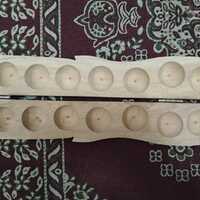 Pallanguzhi Pallanguzhi |
Physical Object |
| Sat Gol Game |
Text |
| Sat- Gharoa |
Text |
 Unfinished Mancala, Ellora Unfinished Mancala, Ellora |
Physical Object |