Bagh Chal, Kamakhya
Item
- Title (dcterms:title)
- Bagh Chal, Kamakhya
- Description (dcterms:description)
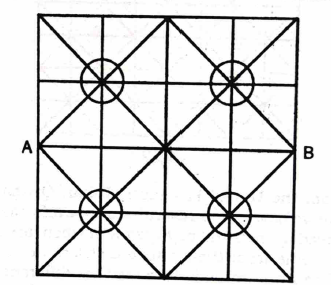
- The game of Bagh Chal, popular by several other regional variants and alternate names has also been documented in the Kamakhya temple region of Assam by Jatindra Mohan Datta. He mentions recording this game from two boys of Nepali descent who were seen playing the game at that time. The location of the board as per his observation in 1939 was on the western side of the temple complex a few yards away from the stone wall built by Narak Asura. This board was engraved and the boys were seen playing this with 2 tigers and 20 pieces of goats.
- Alternative Title (dcterms:alternative)
- Bagh Bandi, Tigers and Goats, Baghchakkar, Chakrachhal, Sher Bakr, Bagh Batti, Sher Bakar, Kaooa, Bam Blang Beh Khla, Bagha Guti, Bagha Cheli, Tagnor, Adu Puli Attam, Puli Meka, Ada Huli, Terhuchu, Kulaochal
- Rules (dcterms:instructionalMethod)
-
Bagh Chal is played on an alquerque board by two players. One has two tigers, while the other has twenty goats. Henceforth they will be called the tiger player and the goat player.
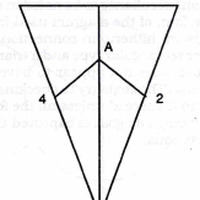
1. The game begins with two tigers on the board, one in each corner, as shown in the diagram.
2. The twenty goats are kept in hand by the player who has taken their side.
3. The goat player takes the first turn.
4. If the goat player has goats in hand, he must use his turn to place one on any empty point on the board.
5. If the goat player has placed all the goats, then he must instead use his turn to move one of the goats from its current position, along a marked line in any direction, to an adjacent empty point.
6. The tiger player in his turn may move a tiger from its current position, along a marked line in any direction, to an adjacent empty point.
7. Only one piece may occupy a point at any one time; stacking of pieces is not allowed.
8. A tiger may sometimes capture, or eat, a goat, instead of moving as described in rule 6.
9. To eat a goat, the tiger player must jump with one of his tigers along a marked line, over an adjacent goat, to an empty point beyond. The goat is then removed from the board and takes no further part in play.
10. The tiger may not change direction in the middle of its jump. A goat is only in danger of being eaten if on one side it has a tiger, and on the other an empty space.
11. Only one goat may be eaten in any one turn. Multiple jumps are not allowed.
12. The tiger player wins when his tigers have eaten five goats. This varies from
13. The goat player wins if the tigers are trapped and the tiger player has no legal move - Creator (dcterms:creator)
- Jatindra Mohan Datta
- Source (dcterms:source)
- ‘Bagh Chal At Kamakhya’ by Jatindra Mohan Datta in Sedentary Games of India eds. Nirbed Ray and Amitabha Ghosh
- Contributor (dcterms:contributor)
- Jatindra Mohan Datta
- Rights (dcterms:rights)
- Creative Commons
- Format (dcterms:format)
- Boardgames
- Medium (dcterms:medium)
- Boardgames on Text
- References (dcterms:references)
- ‘Bagh Chal At Kamakhya’ by Jatindra Mohan Datta in Sedentary Games of India eds. Nirbed Ray and Amitabha Ghosh
- Spatial Coverage (dcterms:spatial)
- Assam
- Variants (dcterms:isVersionOf)
-
 Sher Bakar
-
 Kaooa
Kaooa
-
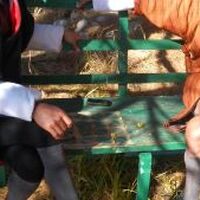 Taag dha Nor or Tagnor (Tiger and Cow)
-
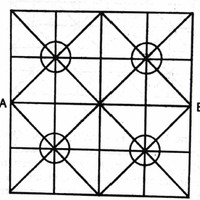 Bagh Chal, Kamakhya
-
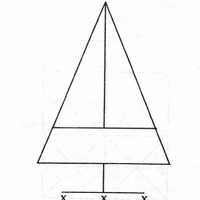 Bam Blang Beh Khla
-
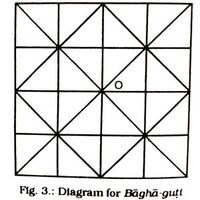 Bagha Guti
-
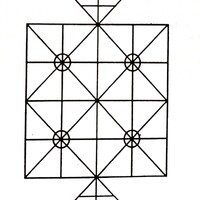 Bagh Bandi
-
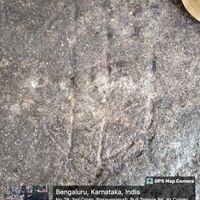 Bagh Chal, Bull Temple (4)
-
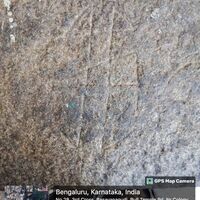 Baghchal, Bull Temple (3)
-
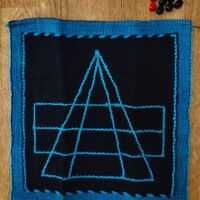 Baghchal, Handmade
-
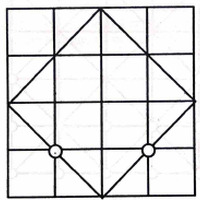 Bagha Chheli ( Odisha)
- Entered by (dcterms:accrualMethod)
- Adrija Mukherjee
- Notes (foaf:status)
- The mention of Narak Asuara of Kamakhya temple leads to the local lore of Narak Asura being a devotee of Goddess Kamakhya.
- Tags (dcterms:conformsTo)
- Sedentary Games
- Games of Assam
- Bagh Chal
- Kamakhya
- Hunt
- Capture
- Two-player
- Alquerque
- etched
- Shape: Square
Linked resources
| Title | Class |
|---|---|
| Bagh Bandi |
Text |
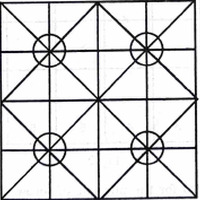 Bagh Batti Bagh Batti |
Text |
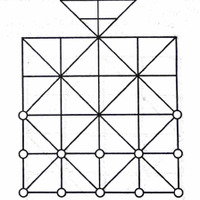 Bagh Chal (variant),Odisha Bagh Chal (variant),Odisha |
Text |
| Bagh Chal, Bull Temple (4) |
Physical Object |
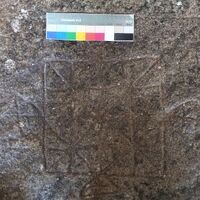 Bagh Chal, Bull Temple (1) Bagh Chal, Bull Temple (1) |
Physical Object |
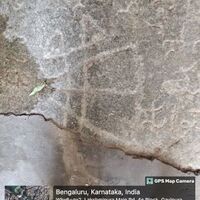 Bagh Chal, Bull Temple (2) Bagh Chal, Bull Temple (2) |
Physical Object |
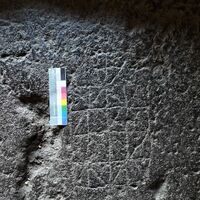 Bagh Chal, Ellora Bagh Chal, Ellora |
Physical Object |
| Bagh Chal, Kamakhya |
Text |
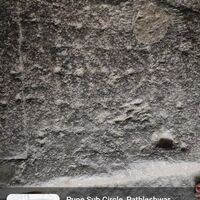 Bagh Chal, Pataleshwar (3) Bagh Chal, Pataleshwar (3) |
Physical Object |
| Bagha Chheli ( Odisha) |
Text |
| Bagha Guti |
Text |
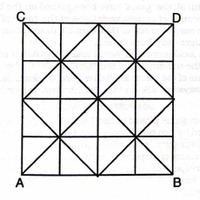 Baghchakkar or Chakrachal Baghchakkar or Chakrachal |
Text |
| Baghchal, Bull Temple (3) |
Physical Object |
| Baghchal, Handmade |
Physical Object |
 Baghchal, Pataleshwar (1) Baghchal, Pataleshwar (1) |
Physical Object |
 Baghchal, Pataleshwar (2) Baghchal, Pataleshwar (2) |
Physical Object |
| Bam Blang Beh Khla |
Text |
| Kaooa |
Text |
 Kulaochal Kulaochal |
Text |
 Mughal Pathan Mughal Pathan |
Text |
| Sher Bakar |
Text |
 Sher Bakr Sher Bakr |
Text |
| Taag dha Nor or Tagnor (Tiger and Cow) |
Image |
 Terhuchu Terhuchu |
Text |