Ratti Chitti Bakri (Red White Goats)
Item
- Title (dcterms:title)
- Ratti Chitti Bakri (Red White Goats)
- Description (dcterms:description)
-
This game was documented by Hem Chandra Das Gupta while he was working on some of his own geological field work. The informants as he stated were Pathan or Pashtun who lived in Mianwali district of Punjab. He explained in his essay that the games he documented from the region were played by everyone in the area including both children and elders, and the games were found at times etched on stone slabs in common spaces. Similar looking boards have been commonly found both in incised patterns in various sites across India inside temples and also in other places.
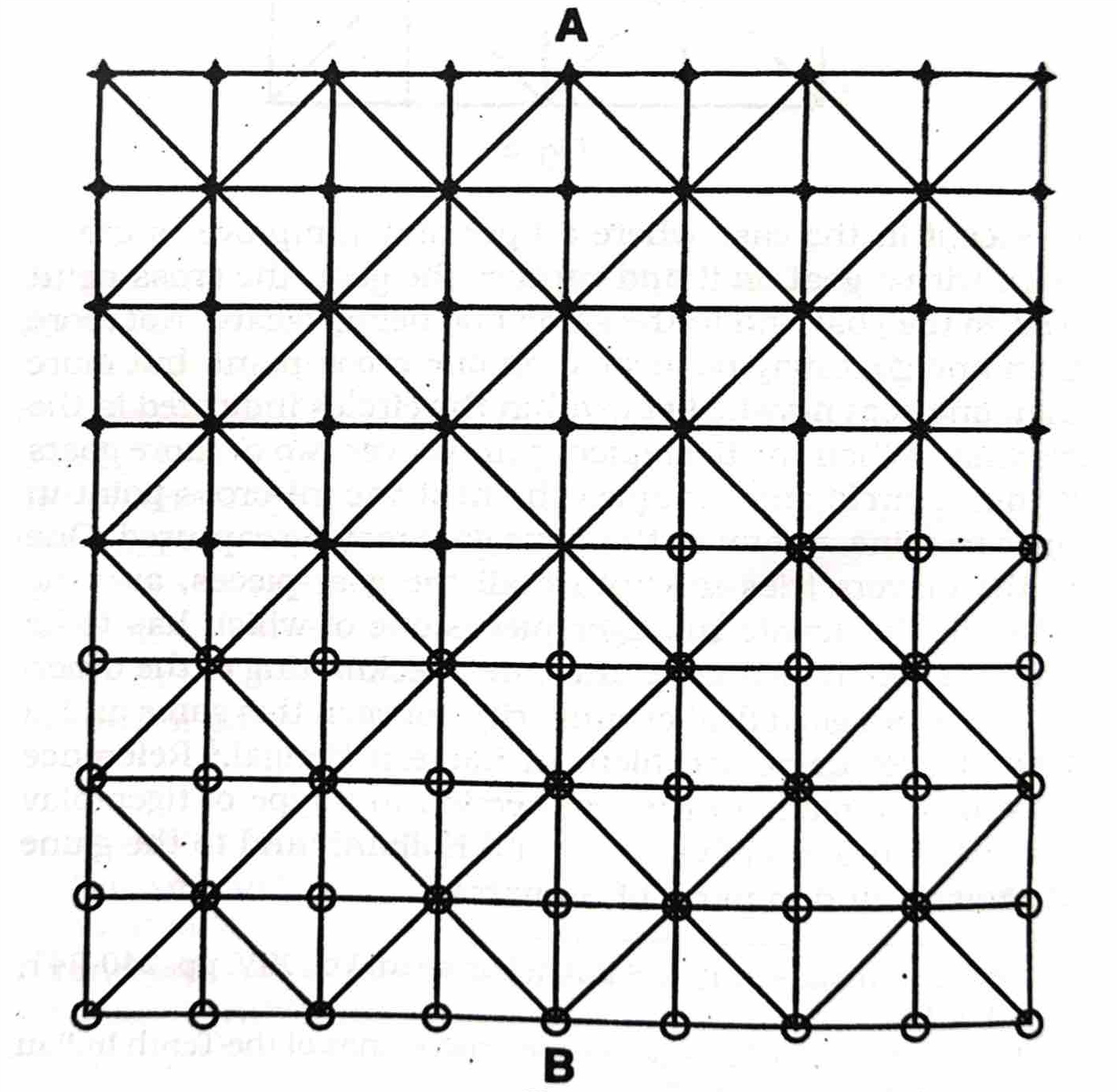
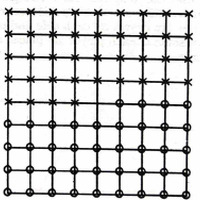
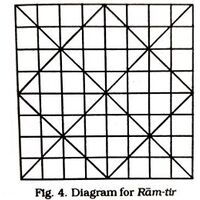
The board of this game has similarities with the games Bis Gutiya and Ram Tir from Bihar. It is a two-player game. According to Das Gupta, there are 81 cross-points and each of the two players is the possessor of 40 pieces, the central point being left vacant. The rules of this game are very similar to the game of Bara Guti. As explained by the informants, this game is played with red and white stones which also relates with the abundance of stones in the region of Mianwali, Punjab in Pakistan. There is a great deal of similarity between this game and the game known as Satul prevalent in Sumatra, the only distinction being that in the Sumatra game, two additional triangles with their apices at A and B are required. Each of these two triangles has six cross-points, so each player has to provide himself with 16 pieces instead of 40 as in case of the Punjab game.
This game travelled to Cape Town in South Africa through East-Indian slave trade under Dutch rule, where it is called Dam Daman and currently Ratti-chitti-bakri is also connected with checkers, roundabouts and draughts, and Surakarta in France. In the Philippines it is known today as damath, as it is used as a teaching tool for maths. The real name of the game is believed to be permainan, which is the Malay word for 'game'. - Rules (dcterms:instructionalMethod)
-
9x9 board played on the intersections, with diagonals for each 3x3 square. Forty pieces per player, one playing as white, the other as red, arranged on opposite sides of the board, each player's pieces taking up the first through fourth ranks of spaces, plus their right half of the fifth rank. The central spot remains empty. Players alternate turns by moving a piece to an adjacent empty spot along the lines on the board. A player may capture an opponent's piece by hopping over one adjacent piece if there is an empty spot behind it along a line on the board. The player who captures all of the opponent's pieces wins.
- Creator (dcterms:creator)
- Hem Chandra Das Gupta
- Source (dcterms:source)
- ‘Few Types of Sedentary Games Prevalent In The Punjab’ by Hem Chandra Das Gupta in Sedentary Games of India eds. Nirbed Ray and Amitabha Ghosh
- Contributor (dcterms:contributor)
- Hem Chandra Das Gupta
- Rights (dcterms:rights)
- Creative Commons
- Format (dcterms:format)
- Boardgames
- Medium (dcterms:medium)
- Boardgames on Text
- References (dcterms:references)
- IOL: Time to revive street culture in District Six with Hanover Street celebration
- ‘Few Types of Sedentary Games Prevalent In The Punjab’ by Hem Chandra Das Gupta in Sedentary Games of India eds. Nirbed Ray and Amitabha Ghosh
- Ludii Database: Ratti Chitti Bakri
- Spatial Coverage (dcterms:spatial)
- Punjab (currently Pakistan)
- Entered by (dcterms:accrualMethod)
- Adrija Mukherjee
- Notes (foaf:status)
- This essay was written before the independence period and after the partition the region of Mianwali now falls under Pakistan.
- Tags (dcterms:conformsTo)
- Ratti Chitti Bakri
- Sedentary Games
- Punjab, Pakistan
- migration
- colonialism
- Two-player
- Alquerque
- Media
 image 2.png
Linked resources
| Title | Class |
|---|---|
 Bis Gutiya Bis Gutiya |
Text |
 Challis Gutia Challis Gutia |
Text |
 Ram- Tir from Bihar Ram- Tir from Bihar |
Text |