Sher Bakr
Item
- Title (dcterms:title)
- Sher Bakr
- Description (dcterms:description)
-
The game that is described in this note is a type of tiger-play prevalent in the district of Shahpur in the Punjab. It is known as Sher Bakr which means lion and goat. The informant of this game was an assistant surgeon of the charitable dispensary of Pail (Shahpur) at the time when Hem Chandra Das Gupta visited the area for his geological fieldwork.
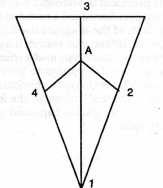
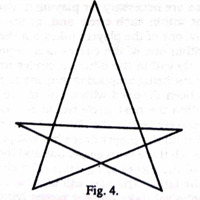
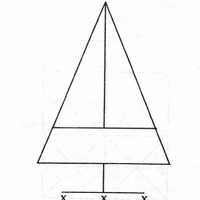
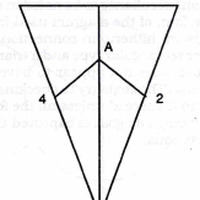
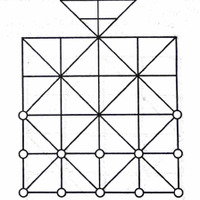
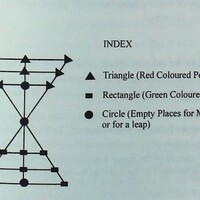
It is a two-player game, one being in charge of one piece, the tiger, and the other in charge of four pieces, the goats. At the beginning of the game the four goat pieces are to be kept at A and the tiger piece at the apex of the triangle, which is at the point marked 1.
The player representing the goat pieces has to move one of his pieces first and then the usual rule is followed according to which a goat piece and the tiger piece can be moved only from one cross-point to another.
But there are some unique points of this game which are worthy of special notice. In all the variants of Bagh Chal or Tigers and Goats recorded, the tiger piece may jump over a cross-point occupied by a goat piece provided the cross-point next to it and in the same straight line is vacant and capture the goat piece. According to the rules of the game as prevalent in Shahpur, the tiger piece may capture the goat piece in this way, while it may also, for the purpose of capturing a goat piece, jump round the angle A either from 2 to 4 or from 4 to 2.
It may also be pointed out that there cannot be more than one goat piece on one cross-point though at the angle A there may be more goat pieces than one. If, however, the tiger piece succeeds in jumping over A and if at that time there are goat pieces more than one only one piece may be captured, recalling in this matter the rules of game recorded in Mianwali, Pakistan.
Another important peculiarity to be noted in connection with this game is the form of the diagram used for playing it. All the diagrams known hitherto in connection with tiger-play are of a square or rectangular type and a triangular diagram. The pieces of the goats are stacked in one place during the beginning of the game which is also one major difference from other variants of tiger and goats.
- Alternative Title (dcterms:alternative)
- Bagh Bandi, Tigers and Goats, Baghchakkar, Chakrachhal, Sher Bakr, Bagh Batti, Sher Bakar, Kaooa, Bam Blang Beh Khla, Bagha Guti, Tagnor, Adu Puli Attam, Puli Meka, Ada Huli, Terhuchu, Kulaochal, Puli Judham
- Rules (dcterms:instructionalMethod)
-
An isosceles triangle, with the height of the triangle and two lines, which bisect the sides of the triangle, but intersect the height at the same point, roughly central, such that they are at an angle but do not bisect it. One player plays as the tiger, which begins at the apex of the triangle, the other as four goats, which begin on the central point. The goats play first, removing one of the pieces from the stack to an adjacent empty spot. The tiger moves along the lines to an empty adjacent spot. The goats also move in this way. Goats may only be stacked on the central point. The tiger may capture a goat by jumping over it, and a jump from one side of the triangle to the opposite side, over the central point, is allowed. The goats win by blocking the tiger from being able to move, the tiger wins by capturing one goat.
- Creator (dcterms:creator)
- Hem Chandra Das Gupta
- Source (dcterms:source)
- ‘On a Type of Sedentary Game Prevalent In Shahpur, The Punjab’ by Hem Chandra Das Gupta in Sedentary Games of India eds. Nirbed Ray and Amitabha Ghosh
- Contributor (dcterms:contributor)
- Hem Chandra Das Gupta
- Rights (dcterms:rights)
- Creative Commons
- Format (dcterms:format)
- Boardgames
- Medium (dcterms:medium)
- Boardgames on Text
- References (dcterms:references)
- ‘On a Type of Sedentary Game Prevalent In Shahpur, The Punjab’ by Hem Chandra Das Gupta in Sedentary Games of India
- Sher Bakr- Digital Ludemi Project
- Spatial Coverage (dcterms:spatial)
- Punjab
- Variants (dcterms:isVersionOf)
-
 Bagh Batti
-
 Sher Bakar
-
 Kaooa
Kaooa
-
 Taag dha Nor or Tagnor (Tiger and Cow)
-
 Bagh Chal, Kamakhya
-
 Mughal Pathan
-
 Bam Blang Beh Khla
-
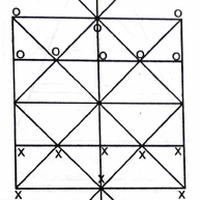 Pam Pait
-
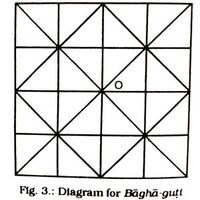 Bagha Guti
-
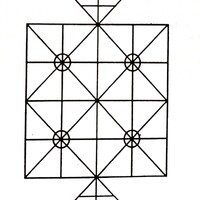 Bagh Bandi
-
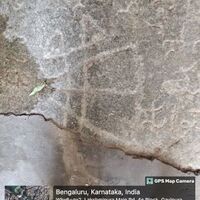 Bagh Chal, Bull Temple (2)
-
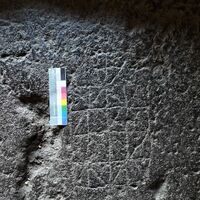 Bagh Chal, Ellora
- Entered by (dcterms:accrualMethod)
- Adrija Mukherjee
- Notes (foaf:status)
- The location of Shahpur that has been stated by Hem Chandra Das Gupta, could be based in either Shahpur, Phillaur of Punjab in India or Rawalpindi, Pakistan. Since this essay was written before Independence and Partition, it is difficult to understand its exact location as of now.
Linked resources
| Title | Class |
|---|---|
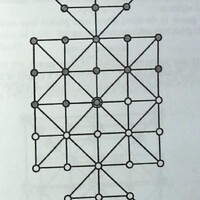 Atharah Guti (Eighteen Pieces) Atharah Guti (Eighteen Pieces) |
Text |
| Bagh Bandi |
Text |
 Bagh Chal (variant),Odisha Bagh Chal (variant),Odisha |
Text |
 Bagh Chal, Bull Temple (4) Bagh Chal, Bull Temple (4) |
Physical Object |
 Bagh Chal, Bull Temple (1) Bagh Chal, Bull Temple (1) |
Physical Object |
| Bagh Chal, Bull Temple (2) |
Physical Object |
| Bagh Chal, Ellora |
Physical Object |
 Bagh Chal, Pataleshwar (3) Bagh Chal, Pataleshwar (3) |
Physical Object |
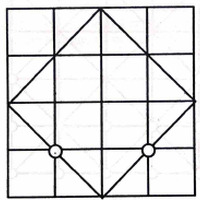 Bagha Chheli ( Odisha) Bagha Chheli ( Odisha) |
Text |
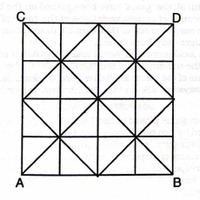 Baghchakkar or Chakrachal Baghchakkar or Chakrachal |
Text |
 Baghchal, Bull Temple (3) Baghchal, Bull Temple (3) |
Physical Object |
 Baghchal, Handmade Baghchal, Handmade |
Physical Object |
 Baghchal, Pataleshwar (1) Baghchal, Pataleshwar (1) |
Physical Object |
 Baghchal, Pataleshwar (2) Baghchal, Pataleshwar (2) |
Physical Object |
| Bam Blang Beh Khla |
Text |
| Kaooa |
Text |
 Kulaochal Kulaochal |
Text |
 Lam Pusri or Sipahi Kat Lam Pusri or Sipahi Kat |
Text |
 Nau Khant Nau Khant |
Text |
 Tarup Ar Merom (leopards and goats) Tarup Ar Merom (leopards and goats) |
Text |
| Tarup Ar Merom (leopards and goats) |
Text |
 Terhuchu Terhuchu |
Text |