Terhuchu
Item
- Title (dcterms:title)
- Terhuchu
- Description (dcterms:description)
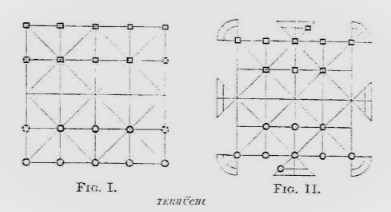
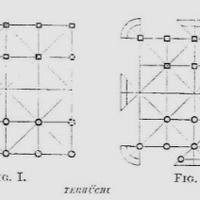
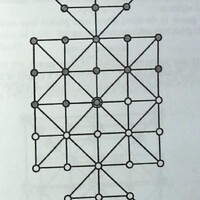
- This board was first documented by John Henry Hutton during his extensive documentation of the culture of the people in Nagaland. He stated that this was one game that the Angami Nagas played and this board had similarities with other forms of Alquerque boards played all across the world. He stated that the name Terhuchu meant fighting-eating which would make sense as the game was intended to fight and eat their opponent’s pieces. The board he explained is of sixteen squares joint by diagonal lines and this game is not always played on a board but on flat surfaces where the diagram of the board is sketched temporarily or even at times incised on the ground or on stone slabs. He further explained that the pieces were usually also bits of stones, moved obliquely or straight along the lines, one going the distance of one square only at a time unless they are able to eat one of their opponents by jumping over them into an empty station beyond. It is a two-player game with each player having ten pieces on their side but at times the pieces to be played with could also be eight instead of ten. Another variant is played with nine pieces on each side. The number of pieces changes the rules and the strategy of the game. According to Hutton, some form of gambling with cowries are also practised by the Angamis, one rule being that no gambler may refuse to go on staking unless the whole sum which they brought with them to the game is exhausted. This game was further documented by Murray, who also mentions the variants of the pieces being used in the game. The Digital Ludemi Project also records this game and mentions that this game has similar rules with Perali Kotuma from Sri Lanka.
- Alternative Title (dcterms:alternative)
- Terhiichii, Terhüchü
- Rules (dcterms:instructionalMethod)
- Nine counters are placed by each player at the intersections, as above. Alternate turns between players entail moving a single counter along a line to any neighboring vacant intersection in any direction or a short jump over an opponent’s counter(s) in a straight line to a vacant intersection just beyond the counter being jumped. Counters are captured by being jumped over and are then removed from the board. Double or multiple captures in one move are permitted and direction may be changed after each enemy counter has been jumped. On any turn that it is possible to take an opponent’s counter it is compulsory to do so. If a player does not make the compulsory capture on their turn by failing to notice it, their opponent may then huff (remove) that counter as a bonus before their next move.
- Creator (dcterms:creator)
- John Henry Hutton
- Source (dcterms:source)
-
Murray, H.J.R. A History of Board Games other than Chess. Oxford University Press, 1952.
Hutton, John Henry. The Angami Nagas, With Some Notes of Neighboring Tribes. London: Macmillan and Co., Limited, 1921.
- Contributor (dcterms:contributor)
- John Henry Hutton
- Rights (dcterms:rights)
- Creative Common
- Format (dcterms:format)
- Boardgames
- Medium (dcterms:medium)
- Boardgames on Text
- References (dcterms:references)
- Angami Nagas by Hutton
- Terhuchu by The Digital Ludeme Project
- A History of Board Games Other Than Chess by HJR. Murray
- Boards and Pieces- Terhuchu
- Spatial Coverage (dcterms:spatial)
- Nagaland
- Variants (dcterms:isVersionOf)
-
 Tarup Ar Merom (leopards and goats)
-
 Kulaochal
-
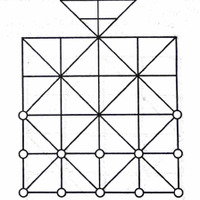 Bagh Chal (variant),Odisha
-
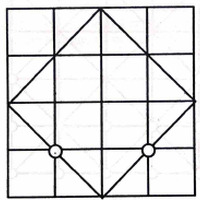 Bagha Chheli ( Odisha)
-
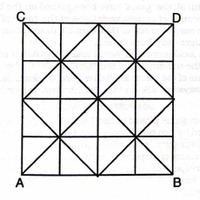 Baghchakkar or Chakrachal
-
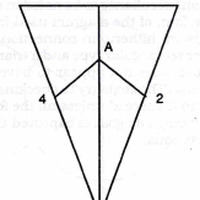 Sher Bakr
-
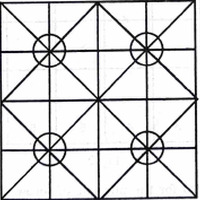 Bagh Batti
-
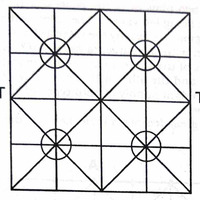 Sher Bakar
-
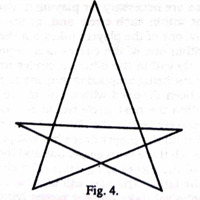 Kaooa
Kaooa
-
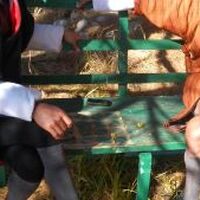 Taag dha Nor or Tagnor (Tiger and Cow)
-
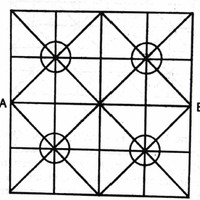 Bagh Chal, Kamakhya
-
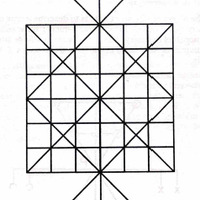 Mughal Pathan
-
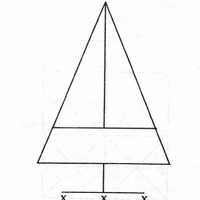 Bam Blang Beh Khla
-
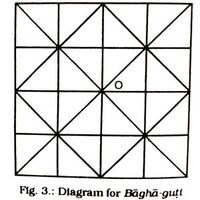 Bagha Guti
-
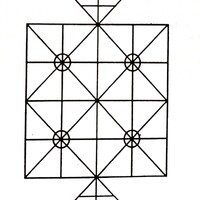 Bagh Bandi
-
 Bagh Chal, Bull Temple (4)
-
 Baghchal, Bull Temple (3)
-
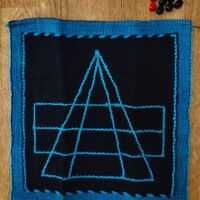 Baghchal, Handmade
-
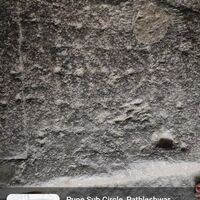 Bagh Chal, Pataleshwar (3)
-
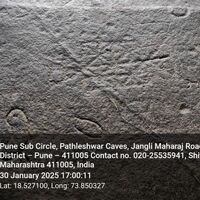 Baghchal, Pataleshwar (2)
- Entered by (dcterms:accrualMethod)
- Adrija Mukherjee
- Tags (dcterms:conformsTo)
- Games of Nagaland
- Alquerque
- Indigenous
- North-east India
- Two-player
- stone
- Hunt game
- Capture
Linked resources
| Title | Class |
|---|---|
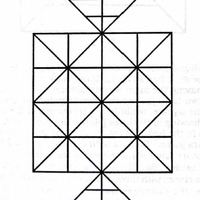 Atharagutiala Teora Atharagutiala Teora |
Text |
 Atharah Guti (Eighteen Pieces) Atharah Guti (Eighteen Pieces) |
Text |
| Kaooa |
Text |
 Lam Pusri or Sipahi Kat Lam Pusri or Sipahi Kat |
Text |