
Nau Khant
Item
- Title (dcterms:title)
- Nau Khant
- Description (dcterms:description)
-
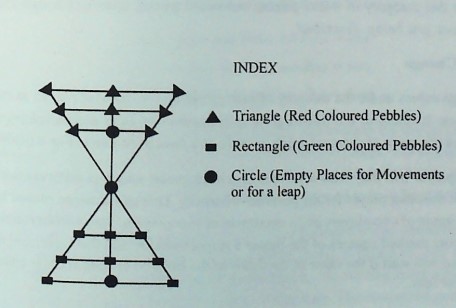
The Nau khant is played in the rural areas of the Mahendragarh district of Haryana state as much as the two preceding games. A set of nine pieces (gutis) of one colour is used by each player. Only two members can play this game, hence pieces of two colours are used.
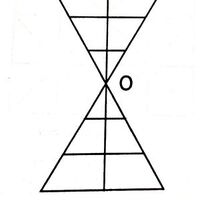
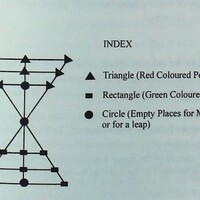
The board, which consists of nineteen points in two triangles, is drawn on a floor with a piece of charcoal, brick or chalk. Either of the players can start the game. The placement of pieces is made in such a way that the opponent will not have the possibility of jumping over his rival's piece. Piece stationed on any point, can move in any direction along any marked line through that point to the next point on that line, which must be empty. If the adjacent point is occupied by the opponent's piece and the next point beyond it on the line is empty, then the player can make the piece leap over his opponent's to the vacant point beyond, and take the opponent's piece.
Similar leaps can be made by either of the players. One of them can become the winner of the game by taking more leaps and thus capturing his opponent's pieces. - Alternative Title (dcterms:alternative)
- Lau Kata Kati
- Rules (dcterms:instructionalMethod)
-
The board, which consists of nineteen points in two triangles, is drawn on a floor with a piece of charcoal, brick or chalk. Either of the players can start the game. The placement of pieces is made in such a way that the opponent will not have the possibility of jumping over his rival's piece. Piece stationed on any point, can move in any direction along any marked line through that point to the next point on that line, which must be empty. If the adjacent point is occupied by the opponent's piece and the next point beyond it on the line is empty, then the player can make the piece leap over his opponent's to the vacant point beyond, and take the opponent's piece.
Similar leaps can be made by either of the players. One of them can become the winner of the game by taking more leaps and thus capturing his opponent's pieces. - Contributor (dcterms:contributor)
- K Ravi and J S Jayasankar Rao
- Rights (dcterms:rights)
- Anthropological Survey of India
- Format (dcterms:format)
- Boardgames
- References (dcterms:references)
-
Indian Boardgame Survey by R.K. Bhattacharya, Irving Finkel, L.N Soni
- Spatial Coverage (dcterms:spatial)
-
Mahendragarh District, Haryana
- Variants (dcterms:isVersionOf)
-
 Tarup Ar Merom (leopards and goats)
-
 Egara Guti
-
 Lau Kata Kati
-
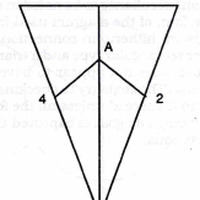 Sher Bakr
-
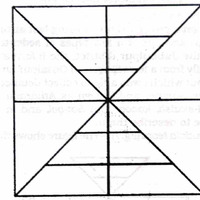 Dash Guti
-
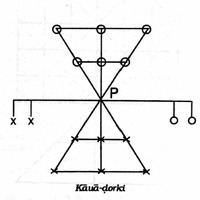 Kaua Dorki
-
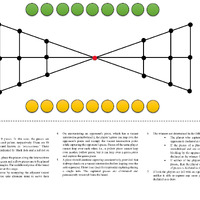 Lau Kata Kati: Downloadable Game
-
 Nao- Gutiya
- Media
 Nau khant.jpg
Linked resources
| Title | Class |
|---|---|
 Atharah Guti (Eighteen Pieces) Atharah Guti (Eighteen Pieces) |
Text |
| Egara Guti |
Text |
| Kaua Dorki |
Text |
| Nao- Gutiya |
Text |