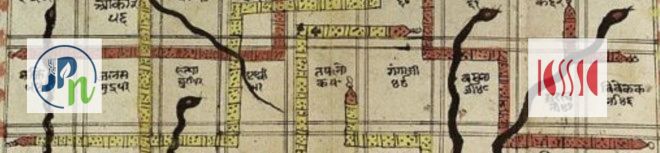
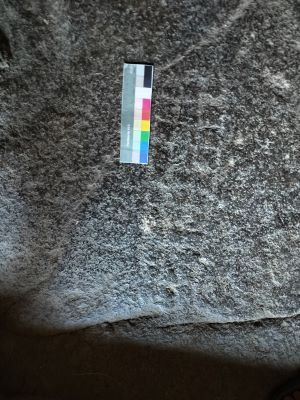
Graffiti Boardgame Tablan in Kailash Temple Ellora
Item
- Title (dcterms:title)
- Graffiti Boardgame Tablan in Kailash Temple Ellora
- Description (dcterms:description)
-
Tablan is a traditional Indian board game for two players, similar to Backgammon and Tâb, where the goal is to occupy more of your opponent's home squares than they do yours. [1, 2, 3, 4]
Here's a more detailed breakdown: [1, 4, 5]
Origin & History: Tablan is an ancient Hindustani game originating in India, particularly in some villages in Mysore, southwestern India. [1, 4, 5] It could have originated from the Roman games Duodecima Scripta
This gameboard has been found in Cave 16 of Ellora also known as the Kailash temple. - Alternative Title (dcterms:alternative)
- Tablaan, Tablaa, Tabul Phale
- Rules (dcterms:instructionalMethod)
-
Gameplay: [1, 3]
• Players use a 12x4 board, with each player having 12 pieces on opposite edges. [1, 3]
• The game is played with four casting sticks, each with one side marked and the other plain. [1, 2]
• Players throw the sticks alternately, counting the plain sides showing, and the player who throws a 1 starts the game. [1, 2]
• The goal is to get your pieces to the enemy's home row, and the winner is the player with the most pieces in their enemy's home row. [1, 2]
• Related Games: Tablan bears some resemblance to Backgammon and Tâb and is likely related to one or both of these games. [4, 6]
• Materials: You'll need a Tablan board, 12 pieces of each player's color, and four casting sticks. [1, 2, 5] - Creator (dcterms:creator)
- Unknown
- Contributor (dcterms:contributor)
- Souvik Mukherjee and Adrija Mukherjee
- Rights (dcterms:rights)
- Creative Commons
- Format (dcterms:format)
- Graffiti gameboard
- Medium (dcterms:medium)
- Graffiti Board on Basalt Rock
- Temporal Coverage (dcterms:temporal)
- Ellora Kailash temple of Cave 16 roughly dates to the 8th century CE.
- Spatial Coverage (dcterms:spatial)
- Ellora, Aurangabad, Maharashtra
- Entered by (dcterms:accrualMethod)
- Adrija Mukherjee
Linked resources
| Title | Class |
|---|---|
 Bheri Bakri Bheri Bakri |
Text |
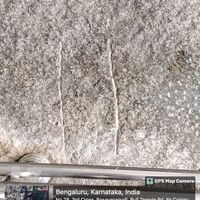 Incomplete Board, Bull Temple Incomplete Board, Bull Temple |
Physical Object |
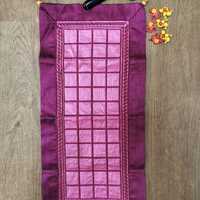 Tablan, Handmade Tablan, Handmade |
Physical Object |
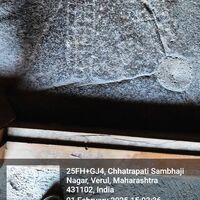 Tablan, Jagannatha Sabha, Ellora Tablan, Jagannatha Sabha, Ellora |
Physical Object |
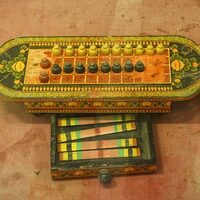 Tabul Phale Tabul Phale |
Text |