
Indian Boardgames: A history
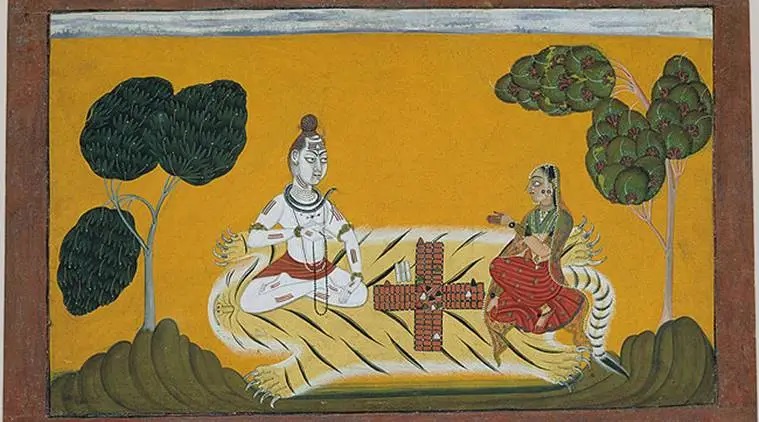
India is the home of a large number of boardgames many of which have, arguably, originated in the Subcontinent since antiquity. The history of chess begins in India as Chaturanga and then in the many forms of shatranj as the game adapted itself in later times and after being influenced by other cultures. With the coming of the European powers to the Subcontinent and the subsequent transculturation of board and card games, the games and their ludic cultures saw many changes. Chess changed its rules, Caupar became Ludo and Gyan Chaupar became Snakes and Ladders. Other games such as Bagh Chal and Mancala (in its many Indian variations) remained but got obscured. Gameboards and pieces have always been ephemeral and vulnerable to destruction. Andrew Topsfield, one of the most eminent scholars of Indian boardgames, comments: 'Indian games after having been transmitted orally for many generations, have died out or will soon do so' (Topsfield 11). Even someone as intelligent, wealthy and powerful as king of Mysore, Mummadi Krishna Wodeyar could not ensure the preservation of the rich ludic traditions of this region. In a time, when the world is again moving towards popularising boardgame cultures with hugely successful 'Eurogames' such as Catan and Agricola and Indians are following suit with their investment in modern boardgames and digital game cultures, some of the more sophisticated boardgames from ancient times are dying their slow death.
Most games from India are difficult to date and the historians job is not easy when the dissociation between fact and mythology is to be made. One of the stories about games from India is literally of epic proportions: the dice game forms an integral part of the Indian epic, the Mahabharata. The nature of this dice-game has been commented on at length by one of the foremost historians of games, Johan Huizinga in his Homo Ludens. Commenting on the space of the dice-game, the board as it were, Huizinga states '[g]enerally it is a simple circle, dyūtamandalam, drawn on the ground. The circle as such, however, has a magic significance' (Huizinga). The dyūtamandalam or the dice-circle is also the magic circle that is crucial to Huizinga's description of play as the defining form of culture. Today, scholars are in agreement that the dice in the epic was made of the seeds of the vibhitaka tree but the exact nature of the game remains a matter of speculation although there has been much scholarly work done on it. On the one hand, there is the ambiguity and the fuzziness of history when it comes to ancient Indian boardgames; on the other there is acute neglect by academia and games such as Pretoa, Lau Kata Kati and Bagh Chal do not get any historical attention. There is a recent trend of documenting etched games in secular and religious sites but even that is limited as it does not try to account for the culture of play, one that would be so important for historians of games such as Huizinga.
There are multiple references in Indian literature, both religious and secular of other instances of play. The gods themselves play dice and Shiva and Parvati's dice-game determines the fate of the cosmos as Don Handelman and David Shulman (1997) describe. Although in some popular painting traditions and even in rock-cut sculptures of the Ellora caves a chaupar board is visible, there is still much conjecture. Similarly, while it is agreed that Banabhatta's Seventh Century text Harshacharita contains a reference to chaturanga, a definite dating is difficult. This is perhaps what leads recent Western scholars to conclude that the ludic tradition in India was not that old after all. Such conclusions are, however, misleading.
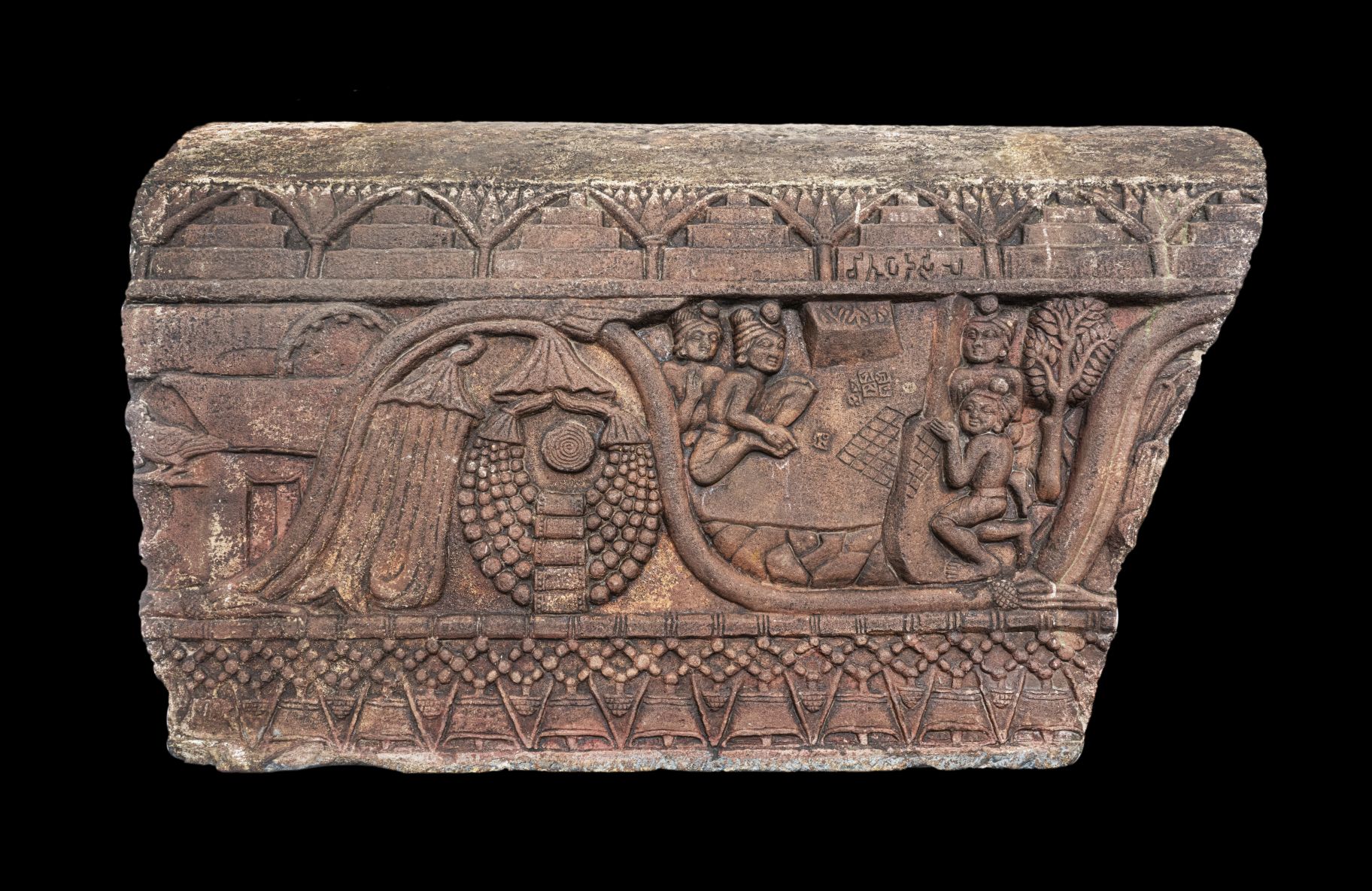
The Bharhut Stupa, built in the 3rd century BC and now housed in the Indian Museum has an enigmatic story to tell about boardgames in India. In one of its panels, there is a rather ambiguous playing scene that is depicted. A group of four people are shown playing a dice game on a 6 X 5 checkerboard and there is a deep crack in the middle of the board. A careful observer will immediately notice that the fissure is a deliberately sculpted one and the board is difficult to identify with our current knowledge of boardgames. There have been many speculations by archaeologists and historians since the time of the excavation of the stupa's ruins but even today the exact game that is depicted is uncertain. The panel serves to show how old boardgames are in India but, of course, the discovery of cube-dice and possible games pieces in Harappan sites shows a much older origin to games. The most important thing that this panel does is to highlight how difficult it is to write any history of games in India using the same techniques used in the Europe and North America. It is hoped here that the metaphorical fissures of history will remain as interesting to the fields that enquire about and address boardgame cultures. Instead of distinct timelines and chronologies (although these too have been followed extensively), what remains of the history of boardgames in India a sort of enigma.
Despite the ambiguity and the difficulty in building a chronology, there has been a consistent body of scholarship on Indian boardgames both in English and in Indian languages. The Chalukya king Someshwara wrote about boardgames in Manasollasa; chronicler Alberuni mentions the chaturanga game in his memoirs and Abul Fazl mentions various games such as Ganjifa and Chaturanga. In the West, Thomas Hyde's De Ludibus Orientalibus records in detail some of the games played in India. Following this, there have been a number of writers such as William Jones and Hiram Cox writing on chess; Edward Falkener on Indian games; Thiruvenkatacharya Shastri's Vilasamanamanjari; Reverend Lal Behari Day writing on the pastimes in Bengal; H.R.V Murray's compendious research on chess and other boardgames and others writing on Indian games in the colonial period. In recent times, the research by Andrew Topsfield, Nirbed Ray, Projit Mukharji, Rudolf van Leyden, Kumkum Chatterjee, Panduranga Bhatta, V. Balambal, Arunima Pati, Kurush Dalal, Jakob Schmidt-Madsen, Raghu Dharmendra, R.G. Singh and Souvik Mukherjee has been able to make a brief foray into the history of boardgames in India.