
About the Project
Abstract
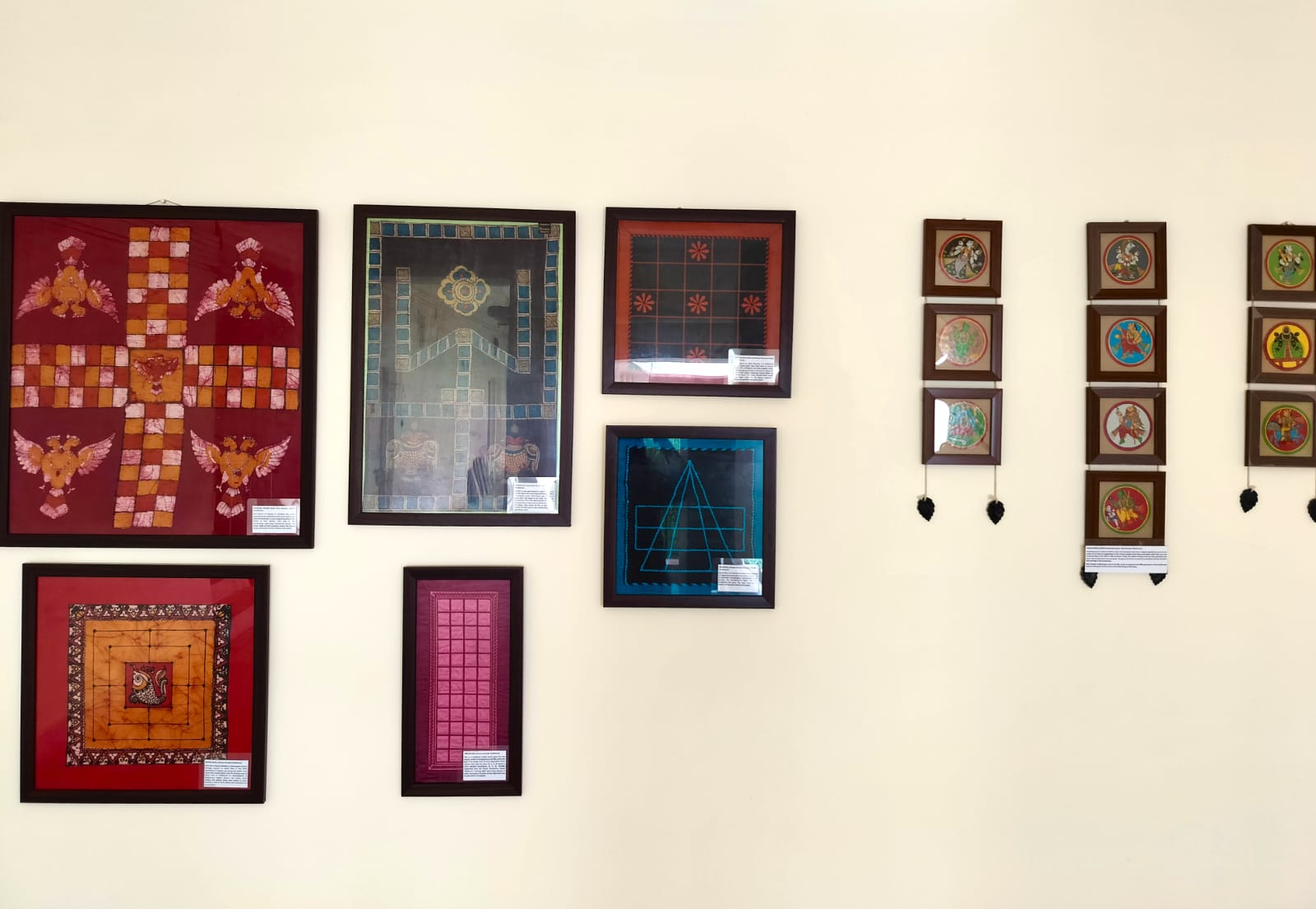
The complex and important impact of board-games in Indian culture has gone largely unheeded and it is only in recent times that through the ‘Make in India’ and ‘toycathon’ initiatives that some focus is being brought back to these extremely important cultural artefacts. Academic research on Indian boardgames, however, is rather limited and no archive or museum of boardgames is available to the public. In keeping with the programme of ‘Digital India’, a digital archive of these games would also be very helpful for both present and future scholars.
In colonial India, the metaphor of the ‘Great Game’ in British colonial foreign policy and the impact of games like Cricket are much celebrated in discourses ranging from postcolonial academic essays to Bollywood films; what went mostly unheeded, however. is a similarly complex and important impact of board-games. Post-independence, this lacuna in research has not been addressed significantly. When the Karmic education-game of Gyan Chaupar, used to teach daily moral lessons, is adapted into the Western race-game called Snakes and Ladders and later into its American version, Chutes and Ladders, there is a great deal happening in cultural terms that has not been thought through. This project is about exploring these cultural exchanges through a ludic1 medium that has hitherto been neglected. Through a digital archive, the project aims to record the performances and play of these games, their various versions and reports by both Indian and Western observers and players through the ages to chart the development and adaptation of these board-games in both India and the West (as mediated via the British Empire) as well as how they provide a parallel commentary on the colonial exchange between these cultures.
Scope and Outcomes (Deliverables)
Indian board-games have been commented on and adopted by colonial administrators and even casual travellers from the West. Likewise, as reflected in Satyajit Ray’s Shatranj ki Khiladi, the role of the chess queen in Western versions of the game change the Indian game in ways that are not merely rule-based but cultural and political as well. From the early texts such as Thomas Hyde’s De Ludibus Orientalibus to the recent commentaries on the rules of these games, the transition narratives of these games is symptomatic of how colonial and postcolonial culture is affected by and in turn, responds to these games. Borrowing the current Videogame Studies concept of ‘gamification’, or the application of ludic principles to real-life events, a map of this exchange as relevant to Indian history and society will be charted.
As an open-access web archive, this project will benefit researchers and general audiences across India by highlighting a shared heritage that was largely unexplored before. It will also help revive interest in dying play traditions and handicrafts, particularly showing how the very earliest concepts of play that have been so successfully marketed abroad were made in India in ancient times. In addition, we plan journal articles and workshops to raise awareness of the games and their preservation techniques.
Context and Relevance
Indian board-games (and indeed other indoor games) form a significant part of our culture. Today, these are threatened with extinction and already many games have disappeared from our cultural lives. Many of the popular board games such as Ludo and Snakes and Ladders have Indian roots but few in India are aware of this. Further, in the face of competition from mobile games and other digital games, many of the earlier gaming practices have become or are becoming extinct. Some of these are deeply connected with our pedagogic, religious and philosophical practices. For example, the game Gyan Chaupar was a game that was aimed to teach Hindus and Jains about the workings of Karma; exported to the West by the British, the game lost its pedagogical import and became a mere chance-based racing game. The dice-game, so famous in The Mahabharata, is now almost extinct and very few know how to play it. Such examples are sadly plentiful but there is almost no research that has been done in India regarding our own games in the last few decades. This is why I was motivated to think of a structured attempt to redress such a grave issue.
There is another aspect to this problem. India is lagging behind in one of the most lucrative and fastest-growing entertainment industries globally: digital games. One of the key hurdles is the lack of innovative content or IP (intellectual property). Digital adaptations of the time-tested Indian game concepts would arguably provide a boost to the sagging game development industry here. This project identifies these areas of lack and goes on to propose methods to address them.
The project already sites itself at the intersections of Cultural Studies, Philosophy and History. In addition, it also uses techniques from Digital Humanities in the creation of the digital archive. Further, in its connect with industry professionals for creating digital remediations of the traditional boardgames, the project also links to Game Design and Digital Media. Boardgames such as Chaupar, Ludo, twenty-nine and Chess form the very basis of our social lives. Unlike in the West, where boardgame studies has taken off in a major way, Indian boardgames continue to be neglected by academia and the governmental cultural organisations. This project shall, ideally, revive interest in the games, recognise their significance and enable their preservation as well as deeper research on play as a part of Indian culture and society.
The revival and digitisation of games will, arguably, be a strong contribution to the ‘Make in India’ initiative. It will also address the Hon’ble Prime Minister’s call to develop the toy industry in India.
Boardgames have been consistently the topic of interest for Performing Arts, Cultural Studies, Anthropology and Sociology departments in Europe and North America. Here is an indicative list of publications that testifies to the interest in the area.
Boardgames such as Chaupar, Ludo, twenty-nine and Chess form the very basis of our social lives. Unlike in the West, where boardgame studies has taken off in a major way, Indian boardgames continue to be neglected by academia and the governmental cultural organisations. This project shall, ideally, revive interest in the games, recognise their significance and enable their preservation as well as deeper research on play as a part of Indian culture and society.
The project already sites itself at the intersections of Cultural Studies, Philosophy and History. In addition, it also uses techniques from Digital Humanities in the creation of the digital archive. Further, in its connect with industry professionals for creating digital remediations of the traditional boardgames, the project also links to Game Design and Digital Media. The revival and digitisation of games will, arguably, be a strong contribution to the ‘Make in India’ initiative.
Objectives :
a. Identify ancient Indian boardgames in their various forms all over the country and document their rules and the physical boards
b. Record the experiences of play practices in their cultural milieu.
c. Create a digital archive of the games together with digital playable versions where possible.
d. Analyse the importance of these games as social media and as cultural artefacts and identify oral history, play practices and other methods to preserve disappearing boardgame cultures in India.
Methodology :
This project aims to construct a database of ancient Indian board games , particularly those that were lost in colonial India or adapted by European and American game-makers. The database will list the rules of the games, reflect the ways in which they might have changed, descriptions of play cultures, the possible location(s) of play, where the games are to be found now and related commentaries on and the representation of the games as available in various media from historical to present times.
The website will also contain sections that will help both enthusiasts and researchers to play these games as they used to be played in the past. As a digital archive, the database will contain a wide range of detailed metadata and algorithms that will enable better search facilities and facilitate numerous query combinations. The various sections of the project are as follows: data-collection, data input and the initial comparative analysis of the data, the construction of the website, the final presentation of the data and the publication of the research results. The basic technical framework for such a database has already been planned and the website will aim to adapt existing content-management systems, drawing on the prior expertise of building the ‘Dutch in Bengal’ and the ‘Scots Cemetery in Bengal’ websites.The website will serve as a springboard of research for academic articles and non-digital forms of dissemination for scholars in both India and abroad. It will also be a resource where the colonial play practices can be revived and studied by the general public across the globe. As this is to be a year-long project, an indicative timeline is provided below.